
Transform a Small Garden with Stylish Composite Decking
A small garden can feel crowded long before it is full. One bulky shed, a patchy lawn, a few mismatched pots, and suddenly the space feels more like storage than somewhere to sit, eat, or unwind.
Composite decking can change that quickly. It creates a clean, level surface, works in awkward corners, and needs less upkeep than timber. Used well, it can make a compact garden feel bigger, brighter, and more useful throughout the year.

Start with a clear purpose for the space
Before choosing colours or board patterns, decide what the garden needs to do. Small spaces work best when every square metre has a job.
A deck can create:
A dining spot close to the kitchen
A quiet seating area at the end of the garden
A low-maintenance alternative to a tired lawn
A safer, more even surface for pots, chairs, and play
A visual link between the house and the garden
Try not to include too many functions. A tiny garden rarely has room for a full dining set, sun loungers, a barbecue zone, and large raised beds. Pick one main use, then support it with simple extras.
For example, if the main aim is outdoor eating, place the deck near the back doors. This keeps food and drinks easy to carry and makes the garden feel like an extension of the kitchen. If the best sunlight sits at the far end, a small floating deck there can create a quiet evening retreat.
The best small garden designs usually feel simple, not empty. The difference comes from careful placement.
Use composite decking to make the garden feel larger
Board direction, colour, and layout all affect how spacious a garden feels. In a narrow plot, run boards lengthways to draw the eye to the far end. In a short, wide garden, laying boards across the width can make the space feel broader.
Lighter shades often work well in tight gardens because they reflect more light. Soft grey, warm beige, and pale oak tones can keep the deck from feeling heavy. Darker boards can look smart, but they may make a small area feel more enclosed, especially if fences or walls are also dark.
For a neat finish, keep the design consistent. Too many changes in board colour, edging, furniture style, and planter material can make the space look busy.
A good compact layout might include:
One deck level instead of multiple platforms
Narrow raised beds along the edges
Built-in bench seating against a fence
A small round table rather than a large rectangular one
Vertical planting to free up floor space
This is where Transform a Small Garden with Stylish Composite Decking becomes more than a design idea. It is about using structure, scale, and finish to make the whole garden work harder.

Choose smart details that save space
In a small garden, details matter. A full-size table can block movement. Freestanding planters can clutter the floor. Chairs that do not tuck away can make the deck hard to use.
Built-in features often solve these problems. A bench along one edge of the deck can seat more people than separate chairs and take up less room. Add hinged lids, and it can also store cushions, small tools, or outdoor toys.
Raised planters can sit flush with the deck edge, giving the garden shape without stealing too much space. They also soften the look of composite boards and help the deck blend into the rest of the garden.
Lighting makes a big difference too. Recessed deck lights, low wall lights, or small solar markers can help define the space after sunset. Keep lighting warm and subtle. Bright glare can make a small garden feel exposed.
For privacy, use tall planting rather than solid screening where possible. Bamboo in containers, pleached trees, climbing plants, or trellis with evergreen climbers can shield views while still letting light through.
Space-saving choice
Built-in bench seating
Wall-mounted lighting
Vertical planting
Foldable furniture
Why it helps
Uses edges instead of floor space
Keeps the deck clear
Adds greenery without clutter
Creates flexibility when guests visit
Plan the installation properly
Composite decking is low maintenance, but it still needs proper installation. A rushed subframe, poor drainage, or weak fixing can cause problems later.
The deck needs a stable base and enough airflow underneath. This helps moisture escape and supports the boards correctly. In many UK gardens, installers use treated timber or aluminium joists over a prepared base. The right choice depends on the ground, the height of the deck, and how long the structure needs to last.
Drainage matters in small gardens because water has fewer places to go. The deck should allow rain to run away from the house, not towards it. Existing air bricks, damp-proof courses, inspection covers, and drainage points must stay accessible.
Also think about height. A deck that sits too high can reduce privacy or create a step that feels awkward. A low-profile design often suits smaller gardens better, especially when it links directly to patio doors.
Before work starts, check:
Where rainwater will drain
Whether the deck affects air bricks or thresholds
How much ventilation the subframe needs
Where steps or edging will sit
Whether any covers, drains, or utilities need access

Style the deck so it feels inviting
Once the structure is in place, styling turns the deck into a garden room. Keep the palette tight. Two or three main colours are enough for a compact outdoor space.
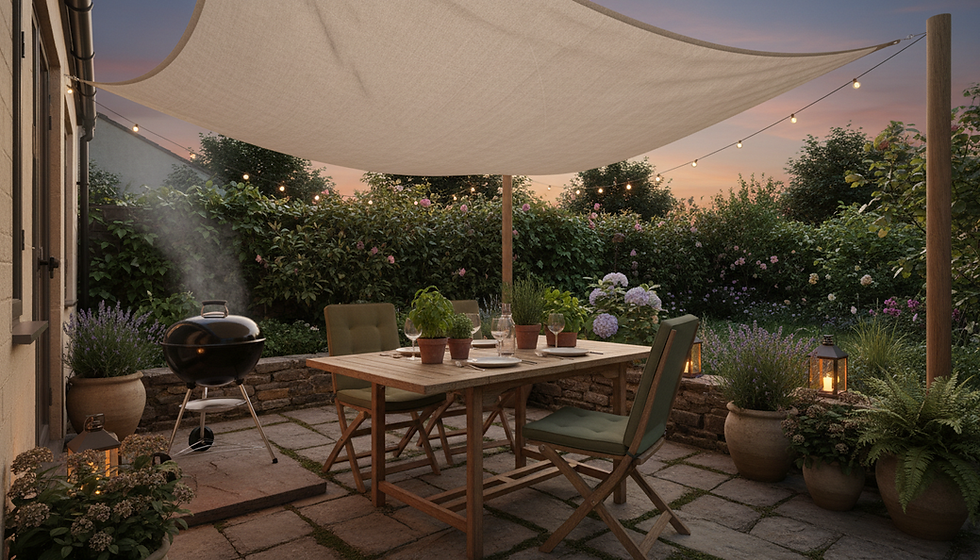
A calm scheme might use pale grey decking, black metal furniture, terracotta pots, and green planting. A warmer scheme could pair oak-toned boards with cream cushions, corten-style planters, and soft grasses.
Choose furniture with slim frames. Heavy timber furniture can dominate a small deck, while metal or rattan pieces often feel lighter. Round tables work well because they improve flow and avoid sharp corners.
Planting brings the space to life. Mix leaf shapes and heights rather than filling every pot with flowers. Evergreen shrubs, herbs, grasses, ferns, and climbers can give structure through more of the year.
Good small-garden styling includes:
Outdoor cushions in weather-resistant fabrics
A compact rug to define the seating zone
Pots in repeated materials or colours
One striking plant rather than lots of tiny ones
Warm lighting for evening use
Leave some deck visible. Covering every inch with furniture and pots can undo the clean, spacious effect.

Keep maintenance simple all year
Composite decking suits small gardens because it needs less regular care than traditional timber. It does not require annual staining or oiling, and it resists splintering. Day-to-day care is usually straightforward.
Sweep the surface to remove leaves and grit. Wash it with warm soapy water when it looks dull. Clean spills sooner rather than later, especially oil from food or barbecues. Avoid harsh chemicals unless the decking manufacturer recommends them.
Small gardens can collect shade and moisture, so keep pots raised slightly on feet. This allows air to move underneath and helps prevent marks. Move furniture now and then to avoid uneven weathering.
A stylish small garden does not need to be complicated. With the right layout, a clear purpose, and well-chosen composite decking, even a modest outdoor space can feel ordered, comfortable, and ready to use. Start with how the garden should feel, then let the deck shape the space around that.

Comments